
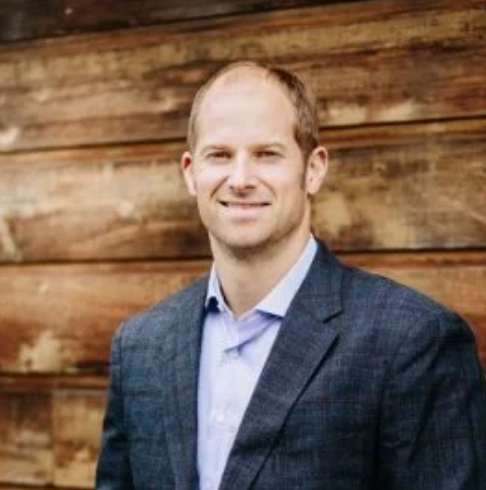
 Benjamin Beck, CFP®
Progress Rarely Feels Comfortable
Just a few weeks ago, my car was in the shop, so I opened up a rental app called Turo. I ended up renting a 2025 Tesla Cybertruck, specifically the Cyberbeast, and took a two-hour trip up to Maine.
Here's what happened.
I'm sitting in my driveway at home in Massachusetts. I punch the destination into the navigation system. Then I press the Begin Self-Driving button.
From that moment on, for the entire two-hour trip, I never touched the steering wheel. I didn't touch the accelerator. I didn't touch the brake. Nothing.
The truck drove me smoothly and beautifully all the way to my hometown of South Portland, Maine. And to cap it off, it finished the trip by backing itself perfectly into a parking space at my destination.
It was incredible.
At first, it felt like I was in unfamiliar territory. Maybe a little unnerving. But that's the thing about change. It does feel strange. It feels unfamiliar. And yet, it can also be a miracle unfolding right in front of us.
When I told a few friends and clients about the trip, the reactions were mixed. Some were genuinely excited. Others admitted they'd be incredibly anxious. A few said things like, "My anxiety would be way too high for something like that."
And that reaction is completely normal.
We all face moments where something new makes us pause. Where we hesitate. Where we feel that tension between curiosity and fear.
So here's the question I'd ask you. Can you think of something in your own life right now where you feel that same hesitation? Were you're uncomfortable making a decision, or delaying the next step, or standing on the sidelines instead of leaning in?
Because the truth is, change is always there. It's not just something to get through. More often than not, it's an opportunity to be embraced.
And that's exactly how we approach your investments.
This is where discipline matters. Markets, like progress itself, rarely move forward in a straight line. The discomfort along the way is not a signal to abandon the plan, but evidence that change is underway.
I'm happy to report another very successful year where our plan, your plan, for pursuing your most important financial goals continued to be driven by those goals, not by predictions about the economy or the markets. And that will remain the case throughout 2026 and the years that follow.
As with all of my annual newsletters, we'll begin by restating the core beliefs that guide our planning and investment approach. From there, we'll offer a few observations on the economic and financial backdrop.
General Principles:
- We are long-term, goal-focused, plan-driven investors. Our core investment policy is to pursue your goals by investing in broadly diversified portfolios of quality equities.
- We believe that the economy cannot be consistently forecast, nor the markets consistently timed. Moreover, we find no predictable pattern in the way markets react to—or choose to ignore—economic developments.
- We conclude from these beliefs that the only way to be reasonably confident of capturing the full premium return of equities is to ride out their frequent, sometimes significant, but historically always temporary declines.
- We do not react to, much less try to anticipate, economic and/or market events. As long as your long-term goals remain unchanged, so will our plan for their achievement. And as long as our plan remains constant, so will your portfolio.
- We believe that long-term compounding of quality equities is the most important force guiding us toward the achievement of your goals. And we're obedient to the late Charlie Munger's dictum, "The first law of compounding is to never interrupt it unnecessarily."
Current Commentary:
- In 2025, the broad equity market posted its third straight year of double-digit returns, supported by a strong economy and materially higher corporate earnings. The S&P 500 finished the year up 17.9%, including dividends.
- Analysts now expect even stronger earnings growth ahead, with consensus forecasts approaching 15% in both 2026 and 2027 (source: Yardeni Research).
- Somewhat surprisingly, profit margins continued to expand, reaching 13.1% in the third quarter of 2025, the highest level in 15 years (source: FactSet). Many expected higher costs and consumer resistance to pressure margins. So far, that simply hasn't happened.
- The one clear soft spot has been employment, which has continued to cool. Even here, there's a meaningful upside: solid economic growth paired with flatter hiring has driven strong gains in productivity. While unemployment has ticked up to 4.7%, the vast majority of workers are producing more per hour, allowing wages to rise without reigniting inflation.
- After six straight rate cuts, the Fed has lowered interest rates by 1.75% over the past year, even with inflation still hovering near three percent. It's reasonable to expect the effects of this easing to show up more clearly in 2026.
- The middle class, in particular, stands to benefit from meaningful tax refunds this filing season, estimated around $150 billion, or roughly a half-percentage-point boost to GDP. A higher standard deduction and the temporary increase in the SALT cap to $40,000 from $10,000 are the primary drivers, creating a potential near-term economic tailwind.
- A sharply rising equity market has likely already reflected much of this information, and possibly more. As a result, the dominant question of the year became, "Are we in an AI bubble?" replacing last year's question, "When and by how much will the Fed cut rates?" which itself replaced 2023's concern, "Will there be a recession?"
- There was no recession, but that misses the point. The question everyone is focused on is usually the wrong one, and often a distraction for disciplined, well-diversified long-term investors like us.
- There's no denying that the market is more concentrated in a small group of very large technology companies than at any point in our investing lifetimes. Not all of them will win the AI race, and that concentration has pushed valuations toward the upper end of historical ranges.
- Our response is straightforward: (a) valuation is not, never has been, and never will be a reliable market-timing tool; and (b) strict & emotionless adherence to our sell discipline systematically addresses this issue, and forcefully so.
- Taken together, this suggests that the next meaningful market shock, and there is always one, is likely to come from an unexpected direction. These events tend to arrive with surprising regularity and matter to us primarily as opportunities, not threats.
- We continue to follow a plan that has worked over the long run by helping investors like us achieve their goals. We don't accept that "this time is different," regardless of what "this" happens to be. We don't go to cash during market panics, and we don't bet the ranch on so-called "new era" miracles, including AI.
So let me bring this home.
Sitting in a self-driving truck while it drives me north to Maine may feel uncomfortable to some. Reality is often uncomfortable. Change rarely feels easy while it's happening. And uncertainty is always part of the deal.
That's not a flaw in the system. It's how progress works.
The remarkable economic and financial progress of the last half century rests on two powerful forces that continue to reinforce one another: the spread of free markets and the exponential advance of information technology. Those forces haven't disappeared. In fact, they continue to accelerate, with the impact of AI only just beginning to emerge.
All of this is true. And all of it can feel uncertain.
We know that. Which is why we don't build your financial future around predictions or headlines. We build it around a plan. A plan anchored to your most important goals, designed to endure discomfort rather than react to it.
We will not waver in our pursuit of helping you achieve your most cherished financial goals. We remain disciplined, optimistic, and committed to the long term, because history continues to remind us that progress rarely feels comfortable in real time.
And yet, it continues to move forward.
We're grateful for the trust you place in us, and we remain honored to walk this path with you.
Sincerely,
Ben Beck, CFP®
Ben Beck is Managing Partner & Chief Investment Officer at Beck Bode, a deliberately different wealth management firm with a unique view on investing, business and life.