
 Beck Bode
When the Worst Happens, What Holds You Together?
There were two moments, Ashley Cotler says, when she was not sure her husband was going to make it.
Justin Cotler, Ashley's husband and the person she built her entire adult life alongside, had been admitted to the hospital in December. What began as a flare-up of a condition he had managed for over twenty years escalated into something far more serious. Twenty-nine days in the hospital. And somewhere inside that stretch, twice, Ashley sat with the weight of the unthinkable.
"There were two times where I thought he wasn't going to make it, to be quite frank. And the only thing that gave me a sense of strength, stability, and comfort was knowing that if and when that day happened, because of how we have our finances set up, I would be able to take that terrible time with my kids and be able to handle the emotional load of losing a spouse and a father. I wouldn't have to be in a scramble. I wouldn't have to sell my house because I couldn't afford it anymore."
It is a stark thing to say out loud. It is also the truest thing Ashley knows.
For April, which is National Financial Literacy Month, Beck Bode wanted to sit down with someone who had not just studied the importance of knowing your finances, but lived it at the highest stakes. Ashley Cotler, Client Success Manager and a central part of the Beck Bode team, has built a life that is, in many ways, a masterclass in starting over. In surviving the unsurvivable. And in learning, sometimes the hard way, that financial clarity is not a luxury. It is a lifeline.
Built from Scratch, Twice
Long before Ashley joined Beck Bode, she and Justin built something extraordinary together.
Justin Cotler is driven by passion and purpose, especially when it comes to helping others reach their full potential in sport. He has a relentless desire to win, and that standard, Ashley will tell you, pushes everyone around him to be better. It is the quality that made him a great coach. It is also, in December, the quality she held onto.
CrossFit Dynamix was not just a business. It was thirteen years of community, coaching, and identity. Justin and Ashley built it from the ground up, two people whose lives were rooted in fitness and in each other. They established their financial base, got married, started a family, and did what Ashley calls the American way: work hard, get stable, then grow.

Then came 2020. And everything changed at once.
"The pandemic hit, CrossFit Dynamix gets shut down, and Jax is born, all in the same week. We lost sixty percent of our revenue in three days. And one hundred percent of our revenue was from the gym."
Ashley pauses at this, even now. "Here we are. All of the financial base that we just spent the last decade preparing and stabilizing just gets pulled out from underneath our feet. And we had to start over."
The decision they made next was not a comfortable one. Ashley and Justin moved across the country to cut their cost of living, run the gym remotely, and stabilize what they could salvage. They were in their mid-to-late thirties. They had a newborn. And Ashley, who had always prided herself on her independence and her drive, found herself facing a lesson she had not expected to need.
"I never wanted to feel paralyzed again," she says. "If a pandemic hit and our one company that we made one hundred percent of our income from was gone, I didn't want to be belly up the same way we were."
The Last Thing She Wanted to Think About
It was during this period of rebuilding that Ashley and Justin were introduced to Beck Bode.
A mutual friend made the connection. Ashley's reaction, by her own admission, was skepticism. "I just kept thinking it was the last thing I want to think about. I don't think we really need this right now."
She laughs at the memory because she recognizes it for what it was: the same resistance most people feel when their financial footing is shaky and someone suggests a plan.
"It's kind of like the idea of, 'I need to be in shape before I start working out.' We don't even have super solid, consistent income coming in. We're breaking even. So why would we even be with an advisor right now?"
The suggestion was to read Dancing With the Analysts by David Malloch, the book that sits at the foundation of Beck Bode's investment strategy. They did. And something shifted.
"It was the first time I actually learned about investing in stocks. I knew nothing about the stock market. It terrified me. I wanted to stay away from it. But the book was just such an easy learning curve. I was like, 'Oh, this is how it works. Why does it seem so much more confusing than this?'"
The strategy was straightforward. Owning a gym, Ashley had spent years aligning fitness goals with client outcomes. The parallel to financial planning clicked immediately. What happened next moved faster than Ashley expected. Within six months of picking up the book, she had read it, met with Ben, onboarded as a client, and was already making introductions for the firm. That led to client services, and eventually to the full-time role she holds today.
"It's a lot easier to look back and say, 'Look at what we've been able to accomplish in the last five years because of how Beck Bode helped set us up.' We would not have had life insurance. We would not have grown our portfolio the way it has grown. We never had slush fund buckets when we owned the gym. You'd make a little progress and then health insurance would jump. You were constantly feeling the effects of inflation. And now I can see how money can compound and combat inflation, and I can actually enjoy it a little along the way."
The Habits That Hold
Ask Ashley about her financial habits and she does not reach for jargon or theory. She reaches for specifics.
She got a raise recently. A small portion of it, eighty-one dollars a month, went straight to her mortgage principal. "What's eighty-one dollars?" she says. "I'm not going to feel any differently with how I live. But that eighty-one dollars a month, over the longevity of the mortgage, is going to save me forty-three thousand dollars in interest."
She also applied a portion of a recent bonus to her principal. That single move cut fifty-eight thousand dollars off her interest burden. The rest of the bonus? She bought herself a coffee maker she had wanted for a while. "Don't just blow them," she says of windfalls. "Those little things can help you get ahead monumentally down the road."
Her family keeps two high-yield savings accounts: one for vacations, one for emergencies and medical costs. The latter matters more than most people would guess. Her daughter Ivy was diagnosed with IgA Nephropathy (also known as IgaN or Berger's Disease) at Stage 2, and the family burns through their full deductible in about six weeks. "In hopes that you don't need it, the money is still accruing a higher interest rate," she says. "But it's there in case you do."
On the credit card front, Ashley studied where the family spends most and matched a rewards card to those categories. They pay the balance in full every month, which transforms the rewards into free travel. With Ivy now competing seriously in gymnastics, travel costs are significant. "We book all our flights, hotels, and rental cars on points," she says. "We're essentially traveling free for her meets."
She also reviews her credit card statement monthly with a level of attention most people skip. "I know to the dollar what our internet bill is, what our security system is, what our water bill is. Because Netflix, Disney, everything is subscription-based now. If you don't keep an eye out, they jump twelve to twenty-seven dollars annually. If you call three of those subscriptions and knock anywhere between twelve and fifteen bucks off, it adds up over a year's time. That's money compounding better in your own pocket than theirs."
|
Ashley's Financial Habits Worth Considering |
|
Teaching the Next Generation, One Conversation at a Time
Ashley's approach to financial literacy does not start in adulthood. It starts in the back seat of a car for her own kids.
She was driving somewhere recently when she decided to explain to Ivy how mortgage interest works. Ivy did not fully get it. Ashley's response: "It's fine. I literally learned it yesterday."
The goal is not to overwhelm. It is to normalize.
"My dad is unbelievably smart and has been amazing with his money. But he just never talked about it. He never talked about how to manage it, compound it, or what investment vehicles would be smart to use. So I probably overly talk about it to my kids because I want it to be such a second-nature, easy thing for them to understand. The longer a runway you have, the more benefit it's going to be for you."
When Ivy and Jax had accumulated a few hundred dollars in their piggy banks from birthday and holiday money, Ashley sat down with Ivy and asked a simple question: if you have ten dollars today that buys a bag of popcorn at a movie theater, do you think ten dollars will still buy that popcorn in ten years?
Ivy said no. Ashley explained that if the money stayed in a piggy bank while prices rose, its buying power would shrink. But in an investment account, four hundred dollars could grow to close to a thousand or more over a decade. Ivy came around.
Ashley opened UTMA accounts for both kids, funded with savings from grandparents and birthday gifts, minus a small amount left for spending. These custodial brokerage accounts grow at a tax-advantaged rate and transfer to the kids at eighteen. "That's their money. It's going to grow. And when they're eighteen, they can use it for a car, for college, for travel. It also means that expense is not going to weigh on me."
A Note, Especially for Women
Ashley is direct when she talks about what she wishes more women understood.
"Force yourself to be curious," she says. "Force yourself to ask questions. Because especially women, we have to micromanage every single step of every single thing we touch. Our kids, our husbands, everything. It's overwhelming. But at the end of the day, no one is going to save you. You have to save yourself."
She is not suggesting that women need to manage the finances alone. She is suggesting that no one should be in the dark.
"Even if your husband manages the money, that's fine. Sit down with him and his advisor so that you at least understand the basic concepts. Where is it? How is it getting funded? Are you even listed as a beneficiary? If he doesn't wake up tomorrow and he's the breadwinner, are you going to have to wait fourteen months for this thing to go through probate before it's given to you? Or does he have it set up correctly?"
Her advice is simple and urgent: take a day. A random Tuesday when the kids are in school. Sit down together and go through it. Have the hard conversations.
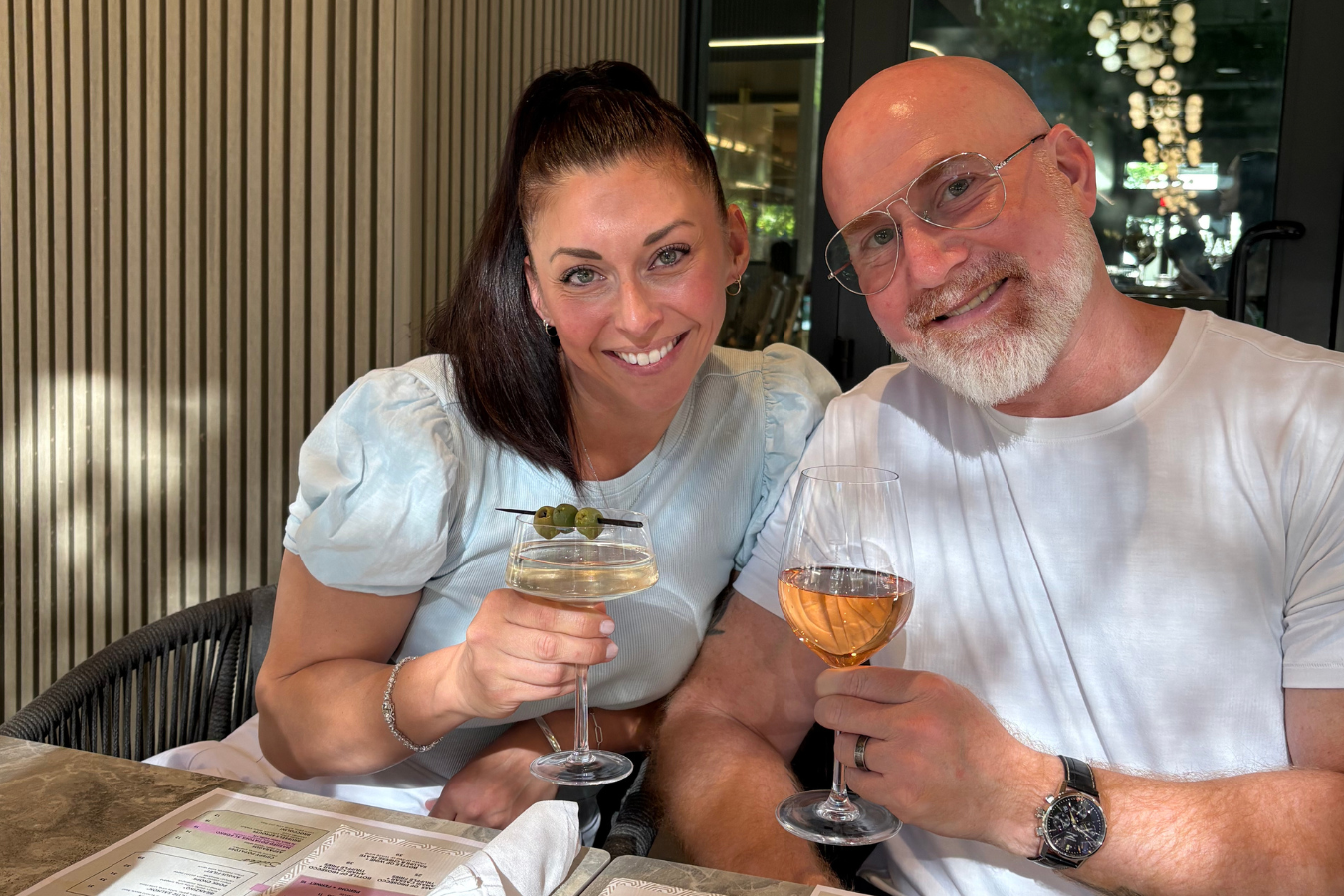
"It's not only going to help your relationship," she says. "It's going to promote peace and protection for the people you love the most. We work and stress so much about money all the time. And when you ask people where their investments are, what they're doing, what they're invested in, they don't know. The one thing that provides for our entire existence is money. We should be super picky and know exactly where every dollar is going, how it's getting spent, and how we can find sneaky ways to have it work harder for us. Because we're working so hard for it."
The Launch Pad
Justin is home. He is recovering. Mayo Clinic has taken over his care, and the road ahead looks steadier than it did a few months ago.
When Ashley looks at the next five years, she uses a word she had been waiting to use for a long time: stability. Owning their home, she says, was always the goal. Not as an endpoint, but as a starting point.
"I said to Justin, when we buy our house, it's going to be our launch pad."
That launch pad has created room for both of them to build in the directions their talents point, without carrying the full operational weight of ownership. She watched what full ownership demanded for thirteen years: the marketing, the payroll, the programming, the emails, all of it at once. Now she gets to show up where she is most effective.
Her daughter is thriving. Her son Jax is six and still working through what Ashley cheerfully describes as an impressive set of feelings. And Ashley Cotler, who has lost a business, gained a family, nearly lost her husband, and learned everything she knows about money the way most people learn what matters most, by living it, is doing what she does best.
She is building. And this time, she knows exactly what she is building on.
-------------------
Ashley Cotler is a Client Success Manager at Beck Bode. If her story prompted questions about your own financial plan, our team would be glad to help you think it through. Schedule a complimentary GPS call with our team at beckbode.com/contact.
Frequently Asked Questions
What is IgA Nephropathy (IgaN / Berger's Disease)?
IgA Nephropathy, also called IgaN or Berger's Disease, is a chronic kidney condition in which IgA antibodies build up in the kidneys, causing inflammation and over time potentially affecting kidney function. It is one of the most common primary kidney diseases in the world. Symptoms vary widely — some people experience very few, while others face more significant progression. There is currently no cure, but treatment focuses on managing symptoms and slowing progression. Ashley's daughter Ivy was diagnosed at Stage 2 Crescent IgA Nephropathy and is currently in remission. Ashley has chosen to share this publicly to help spread awareness.
What is a UTMA account and how does it work for kids?
A UTMA (Uniform Transfers to Minors Act) account is a custodial brokerage account that a parent or guardian controls on behalf of a child. Money placed in the account is invested and grows over time. When the child reaches the age of majority — typically 18 or 21 depending on the state — the account transfers to them automatically. Unlike a 529 plan, a UTMA has no restrictions on how the funds are used, making it flexible for anything from a first car to college to a down payment. It is a straightforward, low-barrier way to start building wealth for your children using money they are already receiving, like birthday and holiday gifts.
How much can paying a little extra on your mortgage principal actually save?
More than most people expect. When you make extra payments directly toward your mortgage principal, you reduce the balance that interest is calculated against for the remaining life of the loan. Even small, consistent additions can have an outsized effect over time. Ashley redirected $81 per month from a raise toward her principal — saving $43,000 in total interest. A separate lump-sum bonus payment saved her an additional $58,000. The key is applying the payment specifically to principal, not to your next scheduled payment, and doing it consistently. Your mortgage servicer can walk you through how to designate payments correctly.
Why keep two separate high-yield savings accounts instead of one?
Most financial guidance recommends a general emergency fund, but separating it into two distinct accounts serves a practical purpose. One account covers true emergencies — job loss, unexpected major repairs, genuine crises. The second covers predictable irregular expenses you know are coming but cannot time precisely: medical deductibles, annual insurance payments, car maintenance, and similar costs. When these two pools are combined, irregular-but-expected expenses can feel like emergencies, creating constant psychological pressure. Keeping them separate gives you clarity on what you actually have available for a real crisis. Both accounts should be in high-yield savings vehicles so the money is working while it waits.
When is the right time to start financial planning?
The most common barrier Ashley hears — and felt herself — is the belief that you need to be financially stable before working with an advisor. Ashley and Justin came to Beck Bode while they were rebuilding after COVID wiped out their business. They were breaking even, uncertain about their income, and felt like planning for retirement was almost absurd given the circumstances. Within six months they had read the book, met with Ben, and onboarded as clients. Five years later, with life insurance in place, a growing portfolio, and the financial clarity that carried Ashley through her husband's hospitalization, the lesson is simple: there is no right time. There is only the time you start.
What is Financial Literacy Month and why does it matter?
April is National Financial Literacy Month in the United States, established to raise public awareness about the importance of financial education and planning. It is a reminder that understanding how money works — how to save it, invest it, protect it, and grow it — is not a skill people are born with. It has to be learned, practiced, and in many cases, sought out. Ashley's story is a direct illustration of why that education matters: not in theory, but in the moments when life puts the most pressure on you and the decisions you made years earlier either hold or they don't.